


Introduction
End‑to‑end encryption (E2EE) provides robust privacy: only the sender and recipient can decrypt messages. Widely adopted in apps like Signal and WhatsApp, E2EE has long been viewed as the gold standard for secure communications. But modern businesses, governments, and legal systems demand far more than privacy. Let’s explore why E2EE should now be considered only a starting point, not a complete solution.
1. Metadata Still Leaks Critical Information
Even when message contents are encrypted, metadata, who sent what, when, and to whom, remains exposed. A 2017 analysis of WhatsApp exposed how attackers could identify user actions, message timing, and even message length with over 96% accuracy despite encryption.
For businesses, patterns revealed by metadata risk exposing organizational structures, negotiation timelines, or confidentiality agreements. That intelligence leak can compromise strategic initiatives long before message content is breached.
2. Internal Threats and Rogue Actors
True security requires more than end‑to‑end channels; it demands visibility and governance within the organization. A recent security report highlights this internal gap: “anyone with access to an encrypted channel can freely communicate … there is no way to restrict or monitor their interactions.”
Insiders, whether malicious or negligent, can misuse encrypted channels, share confidential documents inappropriately, or bypass audit trails in ways that E2EE alone cannot detect or prevent.
3. Auditability and Legal Compliance Needs
Legal and regulatory frameworks require documented trails, identity verification, and tamper-proof evidence, none guaranteed by E2EE. Encrypted messages may be secure, but they don’t meet evidence standards in many jurisdictions, leaving organizations exposed.
Consider today’s courtrooms: a legally binding contract must include identity assurance, timestamps, and an immutable audit. E2EE secures confidentiality, but fails to prove who did what, and when, in a verifiable and, of course, secure way.
4. Forensic Access: Cooperation vs. Going Dark
Law enforcement criticizes E2EE as a barrier to criminal investigations. The FBI warns of communications “going dark” when E2EE prevents lawful access.
While encryption is vital for privacy, businesses and legal systems can’t operate without mechanisms to demonstrate compliance, facilitate audits, or respond to judicial orders.
5. AI Integration and Operational Blind Spots
As AI becomes ubiquitous, firms must reconcile security with analytics. New research highlights a dilemma: introducing AI-powered assistance into encrypted workflows can compromise confidentiality, metadata, or legal certainty.
Processing data for AI-driven insights while preserving legal-grade chain of custody and confidentiality is extremely hard—if not impossible—with basic E2EE.
6. Operational Security Gaps
Even the most secure E2EE systems are vulnerable to operational failures:
- Unencrypted backups: WhatsApp stores decrypted cloud backups by default, creating exposure points.
- Device compromise: Threat actors can retrieve decrypted messages from compromised endpoints.
- Screenshot & forwarding: Conversation security collapses once outputs leave the encrypted channel
Bottom Line: Encryption Alone Is No Longer Enough
Today’s business, government, and legal environments need more than message privacy. For both team communication as well as institution-end user communication, it's vital to utilize advanced platforms. A mature communication system must deliver:
- Metadata protection: Hides sender, recipient, time, or message size
- Internal governance: Oversight of who shares what within the org
- Audit trails: Verifiable chain of custody or signer identity
- Legal compliance: Must satisfy evidential or regulatory standards
- AI & analytics support: Don't Break the E2EE to process data compromises integrity
- Endpoint security: Encrypted data on devices/cloud
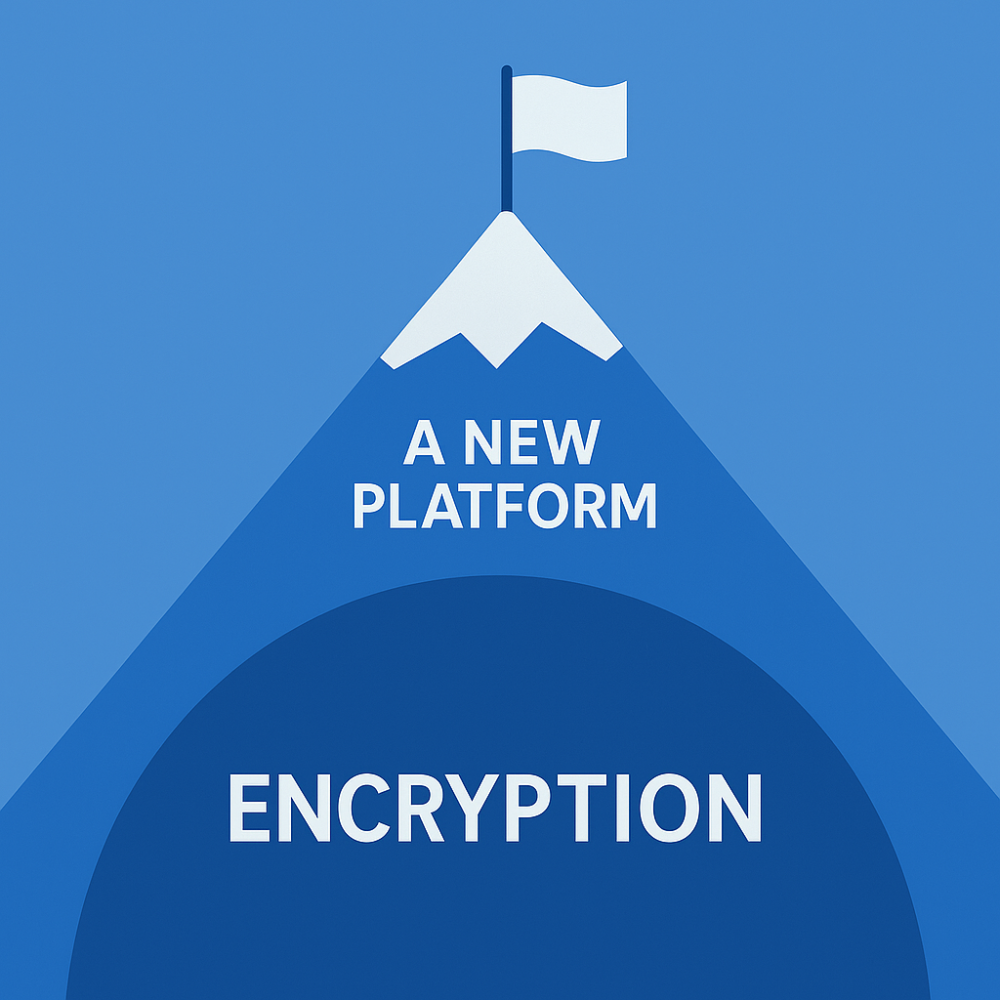
What Businesses & Legal Teams Need: A New Communication Model
In today's advanced world, the modern society needs a platform for formal communication, a new class on its own that solely focuses on 'formal' and 'important' communication. The modern world needs a platform that:
- Encrypts end‑to‑end, including metadata.
- Implements governance, restricting internal access based on roles.
- Provides audit logs, time-stamped and tamper-resistant.
- Verifies user identity, firmly binding messages to actors.
- Supports data processing or AI, without compromising security.
- Secures endpoints, covering backups and device synchronization.
Letro is pioneering that next-generation platform, blockchain-backed, auditable, secure at metadata and endpoint levels, and tailored for institutional-grade communication.
Final Thoughts
End‑to‑end encryption is essential, but increasingly insufficient. Privacy and confidentiality are vital, but business, regulated industries, and legal sectors require accountability, traceability, and forensic-grade evidence. The stakes have changed. The tools must evolve accordingly.
To protect your organization, legally, operationally, and reputationally, it’s time to look beyond E2EE.
For more read, check here:
- Metadata leakage from WhatsApp. Ycombinator - NewYorker
- FBI going dark warnings. Lawfaremedia
- Backup issues & opsec failures. Wired
