


Executive Summary
Many Swiss SME External Asset Managers still deliver sensitive client documents as PDFs via email or generic file-sharing links. While familiar, this practice now creates avoidable exposure across auditability, data control, and client retention, well before a mandate generates sustainable AUM.
Regulatory expectations already prioritize traceability and evidence over convenience. At the same time, client expectations have converged toward private-banking standards. The widening gap between how EAMs operate and how clients experience document delivery has become a structural risk.
This article evaluates whether Swiss EAMs face a genuine delivery-layer problem and why a private-banking-grade vault model is increasingly the baseline for risk mitigation, not a premium add-on.
Email and PDFs Are No Longer a Neutral Choice
Email feels acceptable because it has worked for years. In 2026, that assumption no longer holds.
When a PDF is sent by email, control ends at delivery. The firm cannot reliably determine who accessed the document, whether it was forwarded, or how long it was retained. Evidence of receipt depends on informal signals such as read receipts or follow-up confirmations, none of which form a robust Audit Trail.
From an operational standpoint, this creates fragmentation. Documents reside across personal inboxes, external servers, and unmanaged devices. From a risk perspective, it introduces ambiguity precisely where regulators and auditors expect clarity.
Operational studies by PwC consistently show that manual, document-driven processes are among the largest hidden contributors to compliance cost and operational inefficiency in financial services, particularly for smaller firms without centralized controls. These costs scale with client volume but do not improve risk coverage.
Regulation Already Assumes Stronger Delivery Controls
Swiss and international regulatory frameworks no longer equate compliance with document transmission alone. The emphasis has shifted toward provable process integrity.
Guidance from FINMA increasingly focuses on whether firms can demonstrate who sent a document, who accessed it, when this occurred, and whether the record remained tamper-evident. The delivery channel is secondary to the evidence produced.
FINMA’s guidance on outsourcing, operational risk, and AML controls repeatedly stresses traceability, documentation, and auditability of client-related processes.
Internationally, the Financial Action Task Force explicitly supports digital identity and electronic delivery mechanisms, provided they are risk-based, auditable, and well governed.
In this context, email is tolerated as a legacy method. It is not treated as a regulatory benchmark.
The Client-Experience Gap That Quietly Affects Retention
Most EAMs benchmark themselves against peers. Clients do not.
High-net-worth clients increasingly expect the same interaction patterns they receive from private banks: controlled access, explicit acknowledgments, and confidence that sensitive information is handled deliberately. When an EAM delivers critical documents via email, the contrast becomes visible, even if the advisory relationship itself is strong.
Wealth-management research shows that perceived operational professionalism influences mandate stability, especially during periods of market stress or lifecycle events. Weak operational signals reduce psychological switching costs, even when portfolio performance is acceptable.
Ultra-Secure Messaging Is a Control Layer, Not a Feature
Secure messaging is often framed as usability or convenience. In reality, its primary function is governance.
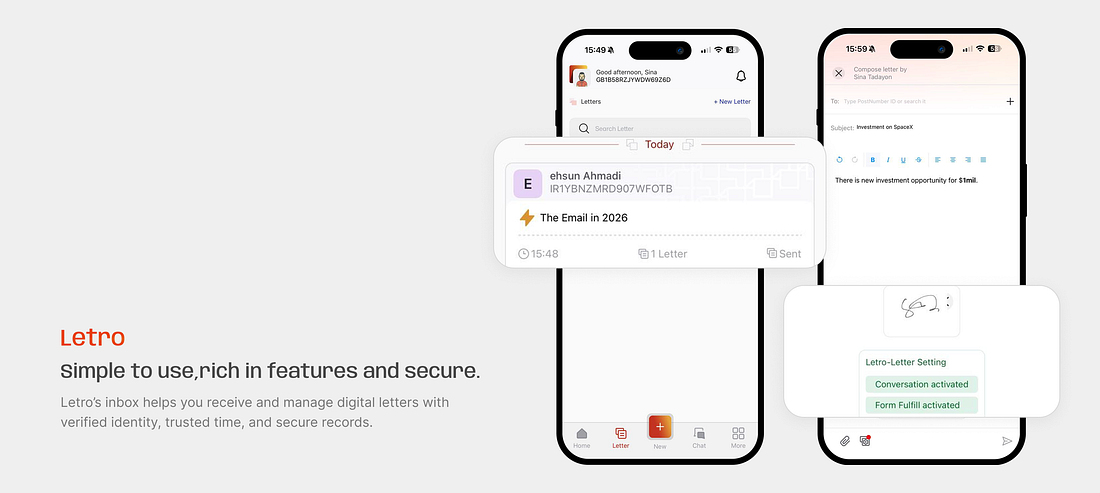
A vault-delivery model converts document exchange from a best-effort action into a controlled process. Documents are accessed within a governed environment, identity assurance is explicit, and every interaction is logged. Retention and deletion follow policy rather than personal behavior.
From a compliance perspective, this creates a single, defensible Audit Trail. From a client perspective, it aligns the experience with private-banking norms, without explanation or training.
The value is not cosmetic. It is evidentiary.
Vault Delivery Reduces Ongoing KYC Friction
KYC friction does not end at onboarding. Periodic reviews, suitability updates, tax documentation, and mandate amendments generate continuous document flows throughout the client lifecycle.
When these exchanges rely on email, friction accumulates quietly. Documents are resent, confirmations are chased, and staff time increases without improving control. Over time, this raises internal cost per client while increasing exposure.
Risk-based AML guidance increasingly emphasizes ongoing due diligence supported by traceable records rather than repeated document collection.
A vault-based model standardizes these interactions, reducing operational drag while strengthening Risk Mitigation.
Adoption Is About Client Stickiness, Not Technology
The strategic question for EAMs is no longer whether secure vault delivery is technically feasible. It is whether continuing with email delivery introduces risks that compound over time.
As private-banking standards become the implicit benchmark, firms that rely on legacy delivery channels face converging pressures: higher audit exposure, rising operational cost per AUM, and gradual erosion of perceived professionalism.
Vault delivery does not replace relationship management. It protects it by ensuring that critical interactions remain defensible long after they occur.

Best Practice
If a document would matter in an audit, a dispute, or a client complaint, email is already the wrong channel.
By 2026, vault delivery will not be an innovation. It is baseline operational hygiene.
